Integrating the Child School Computer Kid Girl Vector into Your Digital Workflow
In the landscape of digital content creation, specific visual assets often serve as the anchor for broader communication strategies. The Child School Computer Kid Girl Vector is one such asset that transcends simple decoration. It represents a specific intersection of themes: education, technology, youth, and learning environments. For professionals ranging from educational publishers to marketing agencies, understanding how to deploy this illustration effectively requires more than just downloading a file. It demands a strategic approach to planning, execution, and integration within your existing design systems.
This article explores the practical application of the Child School Computer Kid Girl Vector in real-world workflows. We will examine how this flat cartoon illustration fits into project lifecycles, interacts with other design elements, and supports the goals of educators, entrepreneurs, and creators who need to communicate complex ideas about online learning and childhood development quickly and clearly.
Defining the Asset and Its Strategic Role
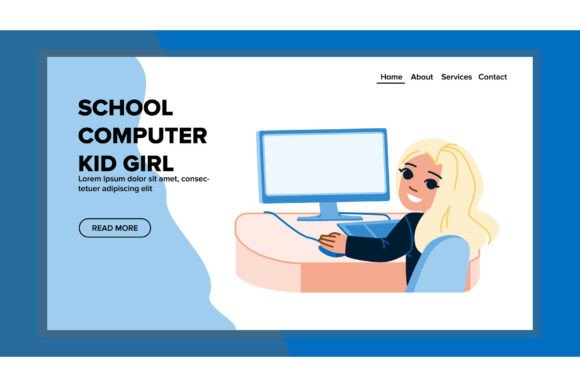
Before integrating any graphic into a project, it is essential to define its semantic value. A Child School Computer Kid Girl Vector is not merely an image of a girl; it is a visual shorthand for the modern student experience. In a web flat cartoon illustration style, these vectors are designed to be scalable, clean, and easily customizable. They typically depict a young child engaged with a computer, symbolizing the shift toward digital literacy and remote education.
For a designer or project manager, this asset serves a functional purpose. It acts as a visual cue that immediately signals "education," "online class," or "study" to the audience. When you select this specific vector, you are making a decision about tone and subject matter. The flat style ensures compatibility with modern UI/UX trends, while the subject matter aligns with current societal focuses on e-learning and STEM education for young children.
Understanding this role allows you to move beyond random placement. Instead of using the image because it looks nice, you use it because it reinforces the narrative of your project. Whether you are building a landing page for a tutoring service, creating an infographic for a school board, or designing social media content for an ed-tech startup, this vector provides a consistent visual language that resonates with parents, teachers, and administrators.
Pre-Project Planning and Asset Selection
The most efficient workflows begin before the first pixel is placed. When planning a project involving education or youth technology, the selection of a Child School Computer Kid Girl Vector should occur during the mood boarding and style guide phase. This early decision impacts color palettes, typography choices, and layout structures.
Consider the context of your project. If you are launching a new platform for virtual classrooms, the vector needs to reflect the accessibility and friendliness of the tool. You might look for variations where the girl appears engaged and happy, reinforcing positive user experiences. Conversely, if the content is about cybersecurity for kids, you might choose a version where the posture suggests focus or caution.
Key preparation steps include:
- Defining the Target Audience: Are you speaking to parents concerned about screen time, or educators looking for engagement tools? The vector's expression and context must match their mindset.
- Establishing Color Harmony: Flat cartoon illustrations rely heavily on solid blocks of color. Ensure the vector's palette complements your brand guidelines without clashing. Most professional vector libraries allow for easy recoloring, which is a crucial step for maintaining brand consistency.
- Determining Format Needs: Decide if you need the asset for print (requiring high-resolution SVG or EPS) or web (optimized PNG or inline SVG). Vectors are ideal here because they scale infinitely without losing quality, ensuring the image looks crisp on both a mobile device and a large billboard.
Integration During the Design Process
Once the asset is selected, the execution phase involves integrating the Child School Computer Kid Girl Vector into your layout. Because this is a flat illustration, it works exceptionally well with minimalist design principles. It avoids the visual clutter associated with photorealistic images, allowing text and calls to action to remain prominent.
In a web design workflow, this vector can function as a hero image, a section divider, or an iconographic element. For example, on a homepage for an online school, placing the vector next to a headline like "Empowering Young Learners" creates an immediate cognitive link between the text and the concept. The simplicity of the flat style ensures that the message is delivered instantly, reducing cognitive load for the visitor.
When working in collaboration with developers, the vector format offers significant advantages. Unlike raster images, vector files can be manipulated via CSS. You can change the stroke width, adjust colors dynamically based on user preferences (such as dark mode), or even animate specific parts of the illustration—like the cursor on the computer screen—to add interactivity without bloating the site's load time.
Workflow considerations for integration:
- Hierarchy and Balance: Do not let the illustration overpower the content. Use white space effectively around the child school computer kid girl vector to give it room to breathe and guide the eye naturally through the page.
- Cross-Platform Consistency: Ensure the vector renders correctly across different devices. Test how the lines and shapes appear on small screens versus desktop monitors to guarantee usability and aesthetic integrity.
- Accessibility: Always provide descriptive alt text. Since the image conveys a specific scenario, the text should describe the action, such as "Illustration of a young girl studying on a laptop for online class."
Post-Production and Long-Term Utility
The value of a vector asset extends far beyond a single project. Once you have integrated a Child School Computer Kid Girl Vector into your system, it becomes part of your reusable asset library. This is where efficiency gains are realized. By standardizing the use of this character or scene, you create a recognizable brand identity over time.
Imagine a series of blog posts or marketing campaigns focused on "Digital Skills for Kids." Using the same core vector, perhaps with slight variations in accessories or background elements, creates a cohesive narrative thread. Readers begin to associate that specific visual style with your brand's expertise in education. This consistency builds trust and recognition, which are critical components of E-E-A-T (Experience, Expertise, Authoritativeness, and Trustworthiness) in digital content.
Furthermore, vectors are future-proof. As design trends evolve, a flat illustration is easier to update than a photograph. If your brand colors change, you can recolor the entire vector in seconds. If you need to adapt the image for a new campaign focusing on tablet usage instead of laptops, you can modify the vector elements rather than commissioning a completely new photoshoot or illustration.
Practical Implementation Tips
To maximize the utility of this asset, consider the following implementation strategies:
- Create Variations Early: Download or create multiple poses or expressions of the Child School Computer Kid Girl Vector at the start of your project. Having a set of assets ready prevents bottlenecks later when you need a slightly different angle for a slide deck or email header.
- Combine with Data Visualization: These illustrations work well alongside charts and graphs. Use the character pointing at a graph to humanize dry data about student performance or internet usage statistics.
- Leverage for Social Media: Social platforms favor bold, simple imagery. Crop the vector to focus on the face or the computer screen to create engaging thumbnails for YouTube videos or Instagram stories related to study tips or tech reviews.
- Maintain File Organization: Store your vector files in a logical folder structure. Name them descriptively (e.g., "kid_girl_computer_flat_v01.svg") so that team members can find and utilize them without confusion.
Factors Influencing Quality and Usability
While the potential for this asset is high, several factors determine its success in your workflow. Compatibility is paramount. Ensure the vector format you choose is supported by all the software your team uses, whether it is Adobe Illustrator, Figma, Sketch, or web-based editors. Proprietary formats can create friction and delay projects.
Usability also depends on the complexity of the file. A well-constructed vector has organized layers and clear paths. A messy file with hundreds of unnecessary anchor points can slow down rendering times and make editing difficult. Always inspect the source file before importing it into your production environment. Clean up stray points and group related elements to streamline your editing process.
Finally, consider the cultural and contextual appropriateness. While a generic Child School Computer Kid Girl Vector is versatile, ensure the depiction aligns with the diversity of your actual audience. Inclusive design practices suggest offering variations that represent different backgrounds and abilities, ensuring that your educational content feels welcoming to all users.
Conclusion on Workflow Integration
The Child School Computer Kid Girl Vector is a powerful tool when treated as a strategic component of your design process rather than a mere afterthought. From the initial planning stages where it helps define the visual tone, through the execution phase where it enhances user interface clarity, to the long-term maintenance where it supports brand consistency, this asset plays a vital role.
By approaching its use with a focus on preparation, compatibility, and organizational efficiency, professionals can leverage this flat cartoon illustration to communicate complex educational concepts with simplicity and impact. Whether you are an educator creating course materials, a marketer promoting an ed-tech solution, or a designer building a portfolio, integrating this vector thoughtfully ensures your message is not only seen but understood and remembered.