Sensory Overload Cute Cat Headphones PNG: A Design Evaluation
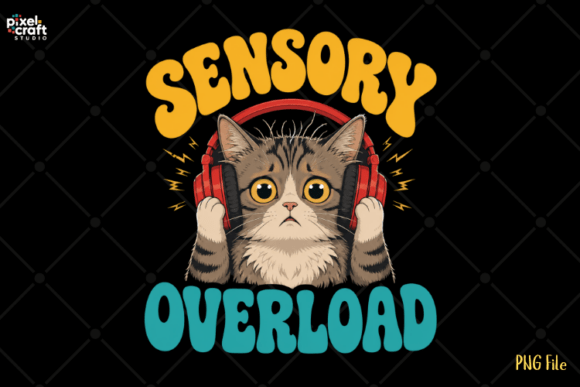
The Sensory Overload Cute Cat Headphones PNG is a digital graphic asset designed for commercial use in the apparel and merchandise sectors. It features an illustration of a wide-eyed tabby kitten covering its ears with large red noise-canceling headphones, framed by retro bubble typography in high-contrast yellow and teal. This design targets specific niches including neurodiversity advocacy, mental health awareness, and animal humor. For creators, boutique owners, and screen printers, understanding the utility, aesthetic limitations, and market positioning of this file is essential before integrating it into a product line.
Understanding the Design Elements
The core visual component of this asset is the anthropomorphic tabby kitten. The character's expression—wide eyes and paws raised to block sound—serves as a universal symbol for sensory overwhelm. By pairing this emotive character with noise-canceling headphones, the design communicates a clear message about the need for quiet and regulation. The typography complements the imagery using a groovy, 70s-inspired font style. The color palette relies on bold contrasts: bright yellows and teals set against the dark tones often found in merchandise backgrounds like navy, charcoal, or black.
Technically, the file is provided in PNG format, which supports transparency. This allows the image to be placed over various background colors without a white box surrounding it. The high-contrast nature of the design ensures visibility when printed on dark fabrics, a common requirement for t-shirts and hoodies. The absence of restricted keywords or trademarked slogans within the text elements makes it a legally safer option for commercial resale compared to designs that might infringe on existing intellectual property.
Market Relevance and Audience Appeal
Interest in the Sensory Overload Cute Cat Headphones PNG stems from the growing demand for representation in the neurodivergent community. Individuals with Autism Spectrum Disorder (ASD), ADHD, and Sensory Processing Disorder (SPD) often seek products that validate their experiences. This design offers a way to express these needs through humor and cuteness rather than clinical terminology. The "cute cat" element broadens the appeal beyond strict advocacy, attracting general pet lovers who may not identify as neurodivergent but appreciate the relatable humor of the situation.
Furthermore, the retro aesthetic aligns with current fashion trends favoring vintage and 70s-inspired graphics. This dual appeal—combining social advocacy with trendy design—creates a versatile product. It fits well within lines dedicated to special education teachers, occupational therapists, and school counselors who wish to wear items that signal empathy and understanding. Additionally, the design serves as a practical gift option for family members looking to support a loved one navigating sensory challenges.
Benefits and Strategic Advantages
For merchants and crafters, the primary benefit of this asset is its immediate readiness for production. Because the design is optimized for dark backgrounds, it reduces the time spent on color correction or background removal. The high contrast ensures that the print quality remains sharp even on textured fabrics like cotton blends or fleece. From a marketing perspective, the design taps into multiple high-demand search categories simultaneously: neurodiversity pride, mental health humor, and cute animal apparel.
The legal safety of the file is another significant advantage. Many digital assets fail due to the inclusion of copyrighted phrases or protected logos. This design avoids those pitfalls, offering a lower risk profile for online boutiques and print-on-demand services. The playful tone also helps mitigate the potential stigma associated with mental health topics, making the merchandise more approachable for a wider audience. It transforms a serious subject into a conversation starter that feels lighthearted and inclusive.
Tradeoffs and Considerations
While the design has strong merits, there are tradeoffs to consider regarding its versatility. The specific color palette of yellow and teal is highly effective on dark garments but may clash with light-colored fabrics. If a seller intends to offer this design on white or pastel shirts, the contrast will be lost, potentially requiring a redesign or color shift that could alter the original artistic intent. Therefore, this asset is best suited for dark merchandise lines.
Additionally, the retro typography style, while popular, may not align with every brand identity. Businesses focusing on minimalist, modern, or corporate aesthetics might find the "groovy" font too busy or informal. The niche focus on sensory overload means the design is highly specific; it may not perform well in markets unrelated to mental health, neurodiversity, or animal lovers. Sellers should evaluate whether their target demographic resonates with this specific blend of themes before committing inventory.
Situations Where This Design Fits Best
This digital asset is a strong fit for several specific scenarios:
- Dark Apparel Collections: Ideal for printing on black, navy, charcoal, or deep purple t-shirts, hoodies, and tote bags where the neon accents pop.
- Advocacy Merchandise: Perfect for autism acceptance events, ADHD awareness campaigns, or SPD fundraising drives where visual representation is key.
- Educational Staff Uniforms: Suitable for special education teachers and therapists who want to display support for their students in a fun, non-threatening way.
- Niche Gift Shops: Effective for online stores specializing in gifts for neurodivergent individuals or cat enthusiasts looking for unique, meaningful items.
- Retro-Themed Boutiques: Complements clothing lines that focus on 70s aesthetics, vintage vibes, and quirky lifestyle brands.
When to Consider Alternatives
There are situations where alternative designs may serve a business better. If the primary product line consists of light-colored fabrics, such as white tank tops or beige linen, this specific color scheme will not render effectively without significant modification. In such cases, a version of the design with darker ink colors or a vector file allowing for full recoloring would be a better investment.
Furthermore, if the brand identity requires a more serious or medical tone regarding mental health, the cartoonish nature of the kitten and the humorous context might feel inappropriate. Some audiences prefer direct, text-based advocacy without the layer of animal humor. Finally, if a seller is targeting a very young demographic, the retro typography might be less engaging than simpler, bolder shapes and fonts. Evaluating the specific needs of the end consumer is crucial before selecting this asset.
Decision-Making Insights
Before purchasing or utilizing the Sensory Overload Cute Cat Headphones PNG, creators should assess their product mix and audience expectations. Ask whether the majority of your customers prefer dark apparel. Determine if the intersection of "neurodiversity," "cats," and "retro style" aligns with your brand voice. If the answer is yes, this design offers a safe, high-quality, and commercially viable option that addresses a specific market need. However, if your focus is on light fabrics, minimalism, or strictly professional advocacy, exploring other assets may yield better results. Ultimately, the value of this graphic lies in its ability to connect with a specific community through a visually striking and emotionally resonant image.