Scholarship Growth and Learning Access: Visualizing Educational Opportunity
In the evolving landscape of educational development, the concepts of Scholarship Growth and Learning Access represent more than just financial aid or curriculum delivery. They signify a holistic ecosystem where funding, resources, and pedagogical tools converge to remove barriers for students. For educators, administrators, and designers working within this sector, communicating these complex systems effectively is a critical challenge. The distinction between simply offering a scholarship and fostering genuine learning access lies in the visibility and understanding of the entire support structure. This article explores how visual metaphors and design assets can clarify these concepts, comparing different approaches to representing educational progress and helping stakeholders decide which resources best fit their communication goals.
The Core Distinction Between Funding and Access
To understand the value of specialized illustrations in this field, one must first distinguish between the mechanics of funding and the reality of access. Scholarship Growth often refers to the accumulation of capital, grants, and endowments intended to support academic pursuits. In contrast, Learning Access describes the tangible ability of a student to utilize those funds to engage with materials, platforms, and instruction. A common pitfall in educational marketing is focusing solely on the money—the "rolling money" metaphor—without illustrating the pathway that leads to knowledge.
Effective visual communication bridges this gap. When an illustration depicts people rolling money alongside pencils, it suggests a direct correlation between financial investment and the tools required for writing and thinking. However, true Scholarship Growth and Learning Access requires a deeper narrative. It involves showing how primary education foundations are built upon sacks of books, symbolizing the heavy lifting of foundational literacy before higher-level concepts can be grasped. Without this layered approach, audiences may misunderstand the scope of a program, viewing it merely as a transaction rather than a developmental journey.
Comparing Visual Approaches to Educational Concepts
When evaluating resources for educational campaigns, there are several distinct styles available, each with its own strengths and tradeoffs. Traditional photography offers realism but often lacks the symbolic clarity needed to explain abstract concepts like "academic progress." Stock photography of students in classrooms is ubiquitous but rarely captures the specific nuances of linguistics scholarships or the mechanics of online learning platforms.
Vector-based illustrations offer a compelling alternative. Unlike static photos, scalable vector graphics allow for customization of color, stroke thickness, and layout. This flexibility is essential when tailoring content for different audiences. For instance, a primary school campaign might require softer colors and simpler shapes to depict sacks of books, while a university-level presentation on e-learning services might demand a sleeker, more technical aesthetic featuring internet learning platforms with study notes. The ability to adjust these elements makes vector art superior for comparative analysis and detailed explanation compared to rigid photographic assets.
Metaphors That Clarify Complex Systems
Specific metaphors play a crucial role in making Scholarship Growth and Learning Access understandable to diverse audiences. Consider the imagery of open books symbolizing linguistics scholarships. This visual immediately communicates the idea of unlocking language barriers and expanding communication capabilities. It is a far more effective tool for engagement than a spreadsheet of grant amounts. Similarly, illustrations of internet learning platforms with study notes provide a concrete representation of digital literacy, a key component of modern educational access.
These visual tools help stakeholders compare different educational models. A traditional brick-and-mortar model might be represented by physical structures and stacks of textbooks, whereas a modern, flexible learning model utilizes icons of connectivity and digital documents. By using these distinct visual languages, organizations can clearly articulate their unique value proposition without relying on dense text. This clarity is vital for adults aged 20–50 who are researching options, as they need to quickly grasp the operational differences between various scholarship programs and learning environments.
Evaluating Format Options for Professional Use
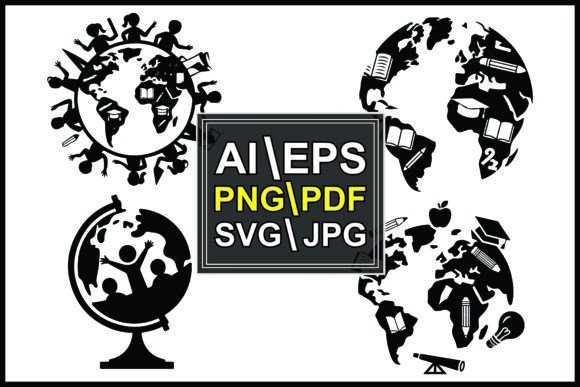
Choosing the right file format is a practical decision that impacts the longevity and versatility of educational materials. The industry standard for high-quality, editable illustrations includes EPS, SVG, PNG, and JPG formats, each serving a specific function in the workflow of creating content about Scholarship Growth and Learning Access.
- EPS Files: These are fully editable vector illustrations ideal for professional design software. They are the best choice for projects requiring significant customization, such as adjusting the layout of a brochure for a scholarship program or changing the color scheme to match a university's branding. The ability to modify individual shapes ensures that the final output remains crisp at any size.
- SVG Files: Scalable Vector Graphics are optimized for web use. For e-learning services and educational platforms, SVGs ensure that icons of study notes or open books load quickly and remain sharp on high-resolution screens. This format is essential for responsive design, where images must adapt to mobile devices and desktop monitors alike.
- PNG Files: With transparent backgrounds, PNGs offer flexibility for placement over various colored backgrounds or photographs. This is particularly useful for social media posts or ads where the illustration needs to blend seamlessly with other design elements without a distracting white box.
- JPG Previews: High-quality preview images serve as quick references for decision-makers. They allow teams to evaluate the style and composition of an illustration before committing to editing or purchasing, streamlining the selection process.
Decision Factors: When to Choose Specialized Illustrations
While generic stock images are readily available, there are specific scenarios where investing in specialized Scholarship Growth and Learning Access illustrations is the superior choice. If your project involves explaining the mechanics of a new funding system, the nuance of vector art becomes indispensable. Generic images often fail to convey the specific relationship between financial aid and educational outcomes. Customizable illustrations allow you to highlight exactly what matters: the transition from a sack of books in primary education to the advanced linguistics studies supported by a scholarship.
Consider the context of a literacy organization launching a new campaign. Using a standardized photo of a child reading might be emotionally resonant, but it does not explain the systemic support behind the initiative. An illustration showing the flow of resources—from the foundation to the student—provides a clearer narrative. It demonstrates the "how" and "why" of the program, which is often what donors and partners are looking for when evaluating the efficacy of an organization.
Conversely, if the goal is simply to add decorative flair to a simple announcement without needing to explain complex processes, a standard photo or a basic icon set might suffice. The tradeoff here is between depth of communication and speed of production. For high-stakes communications like academic funding promotions or school marketing materials, the depth provided by detailed, metaphor-rich illustrations usually outweighs the extra time required for customization.
Tradeoffs and Limitations
It is important to acknowledge that working with vector files like EPS and SVG requires specific software skills. Designers must be comfortable opening these files in preferred design software to adjust colors, stroke thickness, and shapes. This creates a barrier to entry for non-designers who might prefer drag-and-drop solutions. Additionally, while vector art is scalable, it relies on the quality of the original design. If the underlying metaphor is unclear or the execution is poor, no amount of scaling will fix the communication gap.
Furthermore, the cost of acquiring or creating high-quality, custom vector illustrations can be higher than downloading free stock photos. Organizations must weigh this against the potential return on investment. In the realm of Scholarship Growth and Learning Access, where trust and clarity are paramount, the investment in professional-grade visuals often pays dividends in donor confidence and student engagement. The limitation is not in the technology, but in the resources required to implement it effectively.
Practical Applications Across Educational Sectors
The versatility of these illustrations extends across a wide range of educational sectors. For primary school campaigns, the imagery of sacks of books effectively communicates the weight of foundational learning and the community effort required to support it. In contrast, e-learning services benefit from illustrations of internet platforms and digital study notes, signaling modernity and accessibility. Language education content finds its perfect match in open books symbolizing linguistics scholarships, instantly conveying the theme of discovery and expansion.
Academic funding promotions also gain significant traction when paired with visuals that show the progression of growth. Instead of static charts, dynamic illustrations of people rolling money and pencils suggest active participation and movement toward a goal. This kinetic energy is often missing in traditional reports. By integrating these visual metaphors into presentations, ads, and social media, institutions can create a cohesive brand identity that resonates with their target audience.
Ultimately, the choice to utilize specialized illustrations for Scholarship Growth and Learning Access is a strategic decision. It reflects a commitment to transparency and a desire to educate stakeholders about the full scope of educational opportunities. Whether designing for a global literacy organization or a local school district, the ability to visualize the journey from funding to learning access is a powerful tool. By selecting the right formats and metaphors, creators can ensure their message is not only seen but understood, driving real progress in the field of education.